Growth website build: from page delivery to lead system
Legacy sites slow growth not because they look old—but because messaging, structure, technical SEO, content conversion, and maintenance never became a system. Seatevo assesses whether legacy assets are worth keeping before optimize, migrate, or rebuild.
2 tiers
Growth websites
¥29,600
Starting price
Custom
Complex functions
- Multiple tech routes
- Clear source and access ownership
- Core pages you can iterate
- SEO and tracking built in
- Ongoing maintenance after launch
The biggest legacy site problem is blocking future growth moves
When pages, content, speed, tracking, and access are all capped by the old stack, the site stops being an asset and becomes drag.
Weak page messaging
Restructure brand, product, scenarios, and conversion paths so buyers instantly see what you solve.
Template-stitched design
Brand-aligned page components—WordPress for flexibility or fully custom development.
Weak technical SEO and speed
Structured data, performance, mobile experience, sitemap, and monitoring configured at launch.
Nothing you can change
Sections, pages, forms, content, and features stay editable—not locked by dead templates or agency code.
Unclear legacy asset boundaries
Inventory permissions, source, content, URLs, and tracking—decide what to keep vs. what requires rebuild.
Slow response, high change cost
Clear delivery logic and fast iteration so every small change is not a new project cycle.
Legacy takeover: assess control first, then fix or rebuild
Many teams stall not from lack of intent—but because permissions, source, templates, URLs, and tracking constrain each other. We assess control before optimize, migrate, or rebuild.
Discuss legacy takeoverStabilize first
Confirm domain, DNS, admin, source, server, forms, and GSC access so control does not stay scattered.
Surface the blockers
Audit template lock-in, plugin bloat, mobile issues, speed, URL chaos, duplicate content, broken forms, and missing tracking.
Preserve valuable assets
Legacy URLs, blogs, images, cases, and search performance are inventoried—not discarded blindly.
Fix when viable; rebuild when not
With full source and deploy access, optimize in place. When the foundation caps growth, we explain why rebuild saves cost.
Choose scope by company stage first
The overview compares and routes. If the stage is unclear, start with website inquiry diagnosis instead of choosing by budget alone.
Website messaging and inquiry capture are weak
Brand Growth
Rebuild buyer journey, trust proof, core pages, and tiered CTAs.
Start with: Brand Growth
Need content depth and category authority
Category Leader
Build content depth, case evidence, SEO/GEO, and review dashboards together.
Start with: Category Leader
Need backend, workflow, or system integration
Custom Development
Define function boundaries, user roles, data interfaces, and maintenance ownership before quoting.
Enter: Custom development scoping
Two growth website tiers plus custom development
Choose by website conversion needs, category content depth, and business-function complexity. Plans support later upgrades with a price-difference top-up. If the stage is unclear, start with diagnosis.
Brand Growth
From¥29,600
Visuals, messaging, and structure above average
Validated business ready for a site that earns inquiries and supports content growth.
Annual maintenance ¥8,900/year after delivery
Post-launch maintenance: site edits, product updates, content optimization—fast response, unlimited revisions within scope.
Category Leader
From¥59,600
Rebuild to category-leader standard
High-ticket, competitive industries needing brand trust and search assets together.
Annual maintenance ¥18,000/year after delivery
Post-launch maintenance: site edits, product updates, content optimization—fast response, unlimited revisions within scope.
Custom Development
Custom quote
Complex backend and workflows—scope function boundaries first
For projects requiring backend systems, permission flows, data sync, product configurators, customer portals, or third-party integrations.
Maintenance scoped by functions and service range
We first define backend functions, user roles, data interfaces, and maintenance ownership, then confirm development timeline, quote, and post-launch service model.
Brand Growth can upgrade to Category Leader by paying the price difference. Custom features are scoped as add-ons—you do not pay again for work already delivered.
The plans solve different problems, not just different page counts
| Dimension | Brand Growth | Category Leader | Custom Development |
|---|---|---|---|
| Content depth | Buyer validation and trust proof | Industry topics and search assets | Category-leader content depth quoted separately when needed |
| SEO/GEO | Page structure, schema, and tracking at launch | Search and AI visibility review loop | Technical SEO, performance, schema, sitemap, and indexing baseline included |
| Complex backend | Not included | Not included | Quoted by function scope |
| Users and permissions | Basic CMS permissions | Content and case management permissions | Login, roles, permissions, and workflows scoped as needed |
| Data migration | Basic content migration | Content and case asset migration | Legacy data migration and field mapping scoped separately |
| Third-party systems | Basic CRM form integration | Tracking, CRM, and dashboard guidance | CRM, ERP, PIM, payment, email, and third-party APIs quoted as needed |
| Product config / quote flow | RFQ and form paths | RFQ and high-intent CTA review | Selectors, configurators, multi-step quotes, or sample requests quoted as needed |
| Maintenance and SLA | ¥8,900/year | ¥18,000/year | Ongoing development, system operations, and SLA quoted separately |
| Plan upgrades | Upgrade to Category Leader with price-difference top-up | Add custom functions scoped as needed | Change-order pricing for new scope; no double charge for delivered work |
Brand Growth
If the business model is still unvalidated or you only need a temporary landing page, do not start with a full rebuild. You can upgrade later with a price-difference top-up when needed.
Category Leader
If cases, product materials, content ownership, and operating budget are not ready, this becomes packaging instead of an asset system.
Custom Development
If the problem is only website messaging, page structure, or lead path clarity, it does not need to become a complex system build.
Custom development is not an automatic all-in package. Scope the function boundary first.
Custom Development includes the required growth website foundation by default. Complex functions, category-leader content depth, and multi-market localization are combined and quoted as needed.
Website foundation included by default
- Buyer roles and inquiry path mapping
- Information architecture, core pages, and responsive experience
- Baseline brand messaging and core page copy
- Forms, RFQ, source tracking, and baseline CRM integration
- Technical SEO, performance, schema, sitemap, and indexing baseline
Quoted separately by need
- Product selectors, configurators, and complex parameter relationships
- Multi-step quotes, sample requests, and approval flows
- Customer, dealer, supplier, or employee portals
- Login, roles, permissions, and business workflows
- CRM, ERP, PIM, payment, email, and third-party APIs
Not included by default / boundaries
- Category-leader content depth, multi-market localization, and deep knowledge-base modeling are not automatic
- Third-party software, cloud, payment, SMS, and API fees are excluded
- Integration is not promised without interfaces, data access, or technical documentation
- New features after scope confirmation enter change-order pricing
- Ongoing development, system operations, and SLA are quoted separately
Multi-market website localization: help buyers in each market understand, trust, and inquire
If your buyers come from several countries or language markets, direct translation is not enough. This add-on adapts core pages around local search terms, buying questions, terminology, and trust expectations, so buyers do not leave confused or submit vague inquiries.
Choose stack by how you will operate the site
Tech serves operations: content teams need maintainability, complex businesses need freedom, optimizable legacy sites need not be torn down.
Custom WordPress
Long-term blogging, content growth, and in-house page maintenance.
Custom technical implementation
A website implementation route for special interactions, performance needs, or workflow support; entering Custom Development is still decided by backend, workflow, data, and system-integration complexity.
Optimize existing code
Full source and deploy access—rebuild pages, performance, and SEO foundations only.
How will you maintain products, content, and SEO/GEO tags after launch?
Backend depth differs by tier: basic CMS, richer content and case management, or custom-scoped product libraries and publish flows. This is not a standalone CMS SKU.
From planning to launch—conversion and growth base in sync
Website build plans messaging, conversion paths, technical SEO, performance, and tracking together—less rework after launch.
01
Assess current state
02
Define strategy
03
Page copy
04
Visual design
05
Build
06
Launch review
Growth website delivery is a buying-path system, not just pages
Hero, product, case study, FAQ, and inquiry CTA blocks are built as reusable components your team can extend over time.
Hero decision zone
Value proposition, target buyer, proof points, and primary CTA above the fold.
Product / service zone
Organized around buyer questions: use cases, specs, delivery scope, and objections.
Case study trust zone
Customer stories framed with original problem, key actions, signals, and outcome metrics.
Inquiry action zone
Forms, contact paths, downloads, and next steps aligned to procurement stage.
Growth blockers to fix during website build
Fix what affects buyer understanding, trust, and form conversion first—then expand content and features.
Unclear hero value proposition
Rewrite H1 and hero copy so buyers quickly see who you serve and what you solve.
Missing clear CTA and contact paths
Add inquiry, quote, or booking entry points in hero, after key proof, and at page end.
Weak site structure and SEO base
Restructure IA, internal links, speed, and technical SEO foundations.
One case can support different decisions by showing different evidence
Website pages emphasize IA, trust proof, and inquiry paths; SEO/GEO pages emphasize search assets and AI visibility.
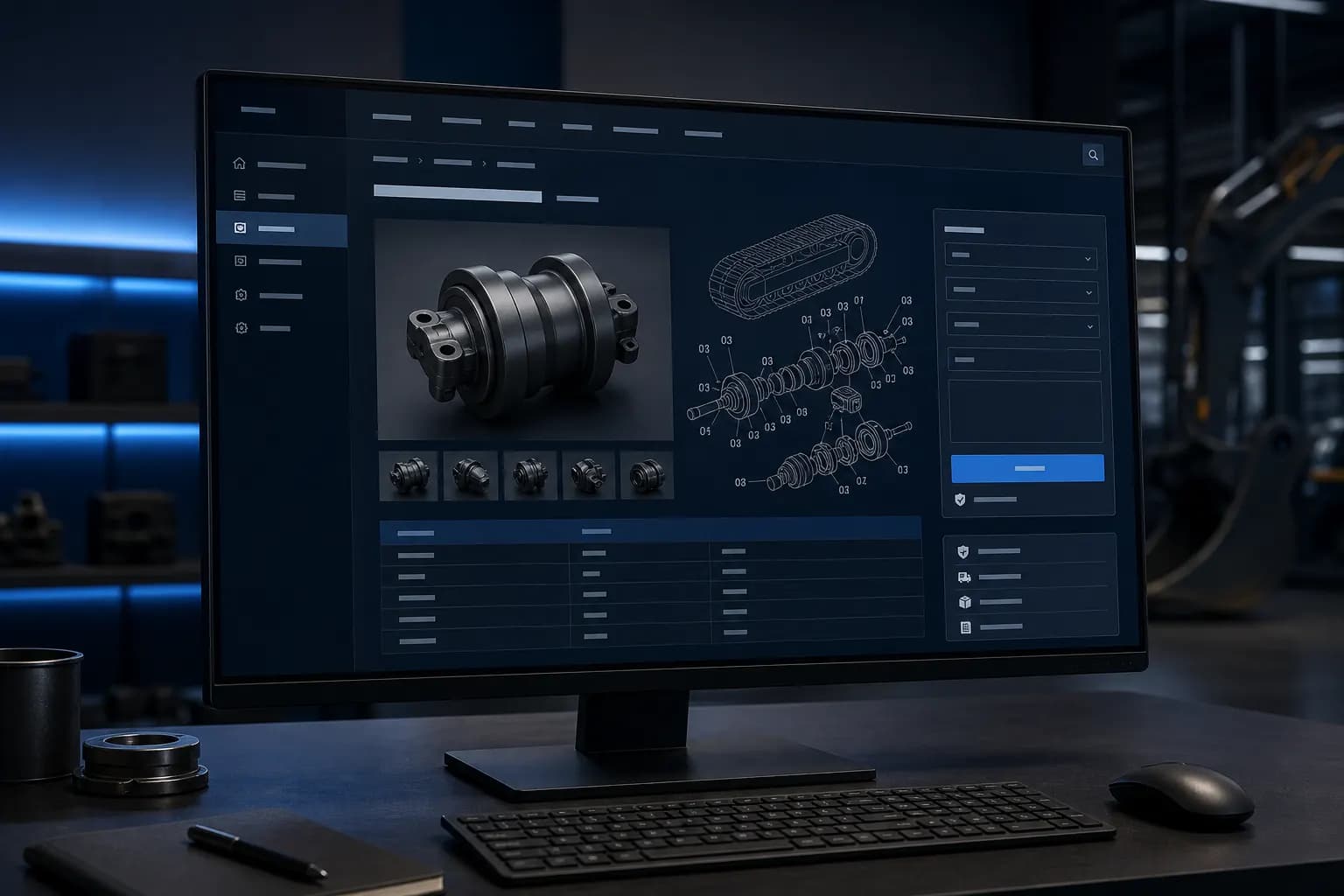
Excavator parts site rebuilt from brochure to lead system
Core product pages began generating steady inquiries after rebuild
View case
Textile machinery maker reorganizes content by regional buyer habits
Rewrote application content for priority markets like Bangladesh
View caseTalk with the Seatevo team
Not sure which tier? Start with a website assessment
Use one form to share your site and project stage. The detailed assessment happens inside the diagnosis flow.