Turn your B2B website into a system where buyers self-qualify and start the inquiry
Seatevo combines buyer research, information architecture, evidence design, layered CTAs, SEO/GEO, and measurement so procurement, engineering, quality, and management can make key judgments before talking to sales.
6
inquiry growth layers
6
public case breakdowns
48h
initial diagnosis promise
Not a bundle of pages — one six-layer inquiry path
Weak inquiries usually mean a broken decision path — not a missing button
Overseas buyers will not fill in missing supplier information for you. One unanswered decision question can remove you before sales ever speaks to them.
Messaging gap
They cannot tell what you do
The hero talks about vision but not category, audience, applications, or a concrete difference.
Research gap
They cannot confirm fit
Product pages show images and specs but lack selection logic, operating context, and compatibility guidance.
Trust gap
They cannot trust delivery
Certifications, QC, factory, cases, and lead-time evidence are scattered and hard to verify.
Action gap
They do not know what to do next
The whole site offers one Contact Us path with no lightweight help or quote-ready RFQ.
Brochure website vs. inquiry growth system
| Task | Brochure website | Inquiry growth system |
|---|---|---|
| Hero task | Introduce the company | Clarify category, fit, and next action |
| Product content | Images + specs | Scenario + specs + difference + evidence + FAQ |
| Trust | One awards wall | Evidence placed before each decision |
| Inquiry path | One Contact Us | Downloads, selection help, diagnosis, and RFQ by intent |
| After launch | Project complete | Review search, behavior, and inquiry quality |
An inquiry is a cross-page buying journey, not one click
At every stage from first search to submitted requirements, the site must give buyers a reason to continue.
Search a problem
Find answers about a product, process, or supply risk
Research approaches
Understand technical routes, materials, and selection
Compare products
Confirm specs, fit, customization, and boundaries
Validate supplier
Verify factory, certifications, QC, and experience
Internal review
Share materials with procurement, engineering, quality, and management
Submit inquiry
Request pricing, send drawings, ask for a sample, or book a call
Six coordinated layers create an inquiry system you can operate
Every layer has defined inputs, page responsibilities, and deliverables, so the project never collapses into visual design alone.
01 · Who needs what outcome?
Buyer and market positioning
Define markets, buyer roles, purchase tasks, search intent, and category boundaries.
Buyer Matrix / Search Intent
02 · How do buyers find answers?
Information architecture
Plan navigation, hierarchy, topic entries, internal links, and cross-page decisions.
Sitemap / Information Architecture
03 · How is fit proven?
Product and solution messaging
Structure products, specs, applications, selection, differences, and service boundaries.
Page PRD / Copy Framework
04 · How is risk reduced?
Trust evidence
Place cases, factory, certifications, QC, delivery, and team proof where buyers need it.
Evidence Map / Case Structure
05 · What is the right next step?
Layered CTA and RFQ
Separate low, medium, high, and technical intent across quick forms, advice, and structured RFQ.
CTA Map / RFQ Fields
06 · How does it keep improving?
SEO/GEO and data
Design crawlability, schema, citable content, events, attribution, and inquiry-quality review together.
SEO/GEO / Analytics Plan
Diagnosis
Let the team identify which layer is blocking your site
The website cannot be written for one vague “procurement manager”
Complex B2B purchases involve several roles, and each needs different evidence.
| Role | Core question | Evidence needed | Relevant pages |
|---|---|---|---|
| Procurement | Are price, MOQ, lead time, and supply stable? | Capacity, stock, delivery scope, RFQ | Product / FAQ / RFQ |
| Engineering | Do specs fit, can it be customized, can we send drawings? | Spec tables, selection, data sheets, customization | Product / Selection hub |
| Quality | Are certification, testing, and failure risks controlled? | Certificate IDs, QC gates, test records | Quality / Certifications |
| Management | Is the supplier real and reliable long term? | Factory, team, customer industries, project cases | About / Factory / Cases |
Every core page owns one buyer decision task
Page count matters less than whether each page answers the question blocking the next step.
Homepage
- Category and audience
- Core applications
- Capability proof
- Layered entry points
Product page
- Applications
- Specs and selection
- Differences and limits
- Evidence / FAQ / CTA
Application page
- Operating problem
- Recommended approach
- Relevant products
- Related case
Case page
- Original problem
- Decision rationale
- Solution path
- Result and scope
Factory / quality
- Equipment and capacity
- QC gates
- Certificates
- Delivery process
RFQ page
- Product / model
- Quantity and specs
- Application / drawing
- Delivery and contact
Do not force everyone to quote — give each intent the right next step
Lightweight actions support research; high-intent paths collect enough information for sales qualification.
Low intent
Continue self-research
View specs / Download checklist / Use free tools
Create the first identifiable touchpoint
Medium intent
Get an expert judgment
Selection help / Website diagnosis / Relevant cases
Identify the problem and project stage
High intent
Enter project discussion
Submit requirements / Discuss rebuild / Book meeting
Qualify and create an opportunity
Separate lightweight diagnosis from deep RFQ
First contact collects only what is needed to diagnose. Model, quantity, specifications, drawings, and delivery are requested once the buyer enters a quote-ready stage.
Use real project records to show how the method works
Cases show only changes supported by pages, deliverables, or inquiry records — never invented conversion numbers.
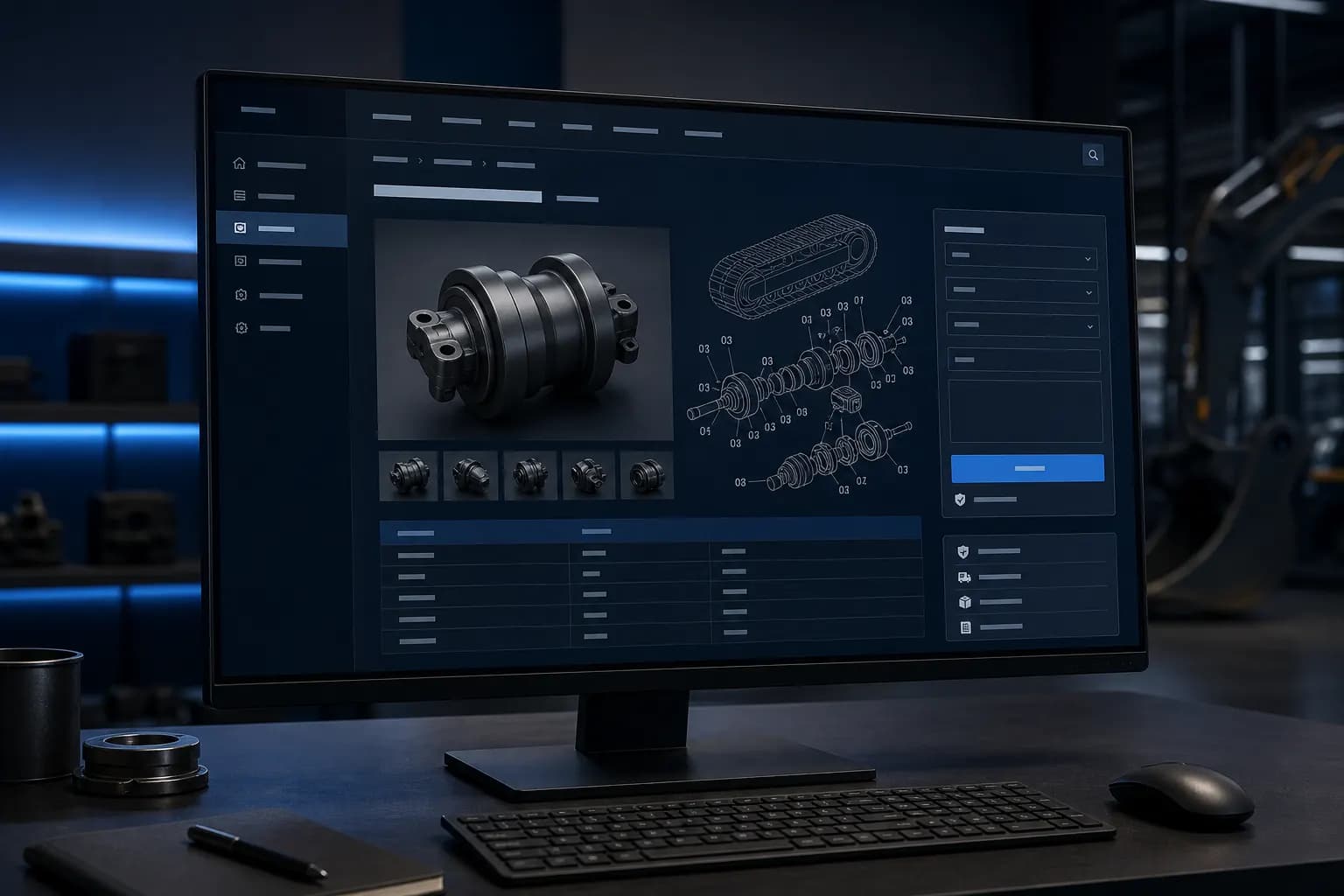
Excavator parts site rebuilt from brochure to lead system
- Original problem
- The homepage read like a brochure, product pages lacked specs, fitment lists, and use cases, the inquiry form was buried in the footer, and mobile experience was poor.
- Key change
- Rebuilt the IA with category navigation, core value, and a fast inquiry entry on the homepage; added specs, fitment lists, and application scenes to product pages; fixed mobile speed and baseline SEO tags.
- Verified change
- Eight weeks after launch, product page dwell time and form submissions both improved. Actual figures vary by baseline and are confirmed through diagnosis reports.

Specialty chemical maker converts inquiries with compliance-first content
- Original problem
- Certification info lived in scattered PDFs, pages did not surface compliance scope, and buyers needed repeated email exchanges just to confirm basics.
- Key change
- Organized certifications, compliance scope, and application limits into structured content pages and FAQ, surfacing key facts directly on product pages.
- Verified change
- After surfacing compliance info upfront, sales reported fewer back-and-forth emails during initial quoting; conversion data is confirmed quarterly.

Textile machinery maker reorganizes content by regional buyer habits
- Original problem
- Content did not cover differences that regional buyers care about, such as power standards, material compatibility, and after-sales service radius.
- Key change
- Mapped priority-market buyer concerns, rewrote application content and after-sales explanations, and planned region-specific content clusters.
- Verified change
- After regional content launched, organic inquiries from priority markets grew as a share of total inquiries; exact figures vary by market baseline.
Not one person making a site — one growth team owning the system
Research, strategy, content, design, development, and growth review share the same buyer and evidence model.
Diagnosis
Identify messaging, trust, search, technical, and inquiry gaps
Buyer and search model
Map roles, journey, intent, and competitive context
Architecture and page PRD
Define page task, modules, evidence, CTA, and acceptance
Content and evidence
Organize specs, applications, cases, certifications, FAQ, and sales materials
Design and development
Build responsive pages, CMS structure, and performance foundations
Launch and tracking
Configure forms, attribution, SEO/GEO, schema, and events
Monthly review
Prioritize the next move from search, behavior, and inquiry quality
Best fit
- Clear products and overseas B2B markets
- Want the website to build trust and qualified inquiries
- Can provide product, case, and sales facts as inputs
Core deliverables
- Buyer and search intent matrix
- Information architecture and page PRD
- Core page copy and templates
- Evidence map and CTA / RFQ design
- SEO/GEO and conversion tracking plan
Not a fit
- Only need a low-cost template or one-off visual showcase
- Will not provide product, case, or sales facts
- Expect automatic growth without ongoing content and data review
FAQ
FAQ
Clarify the website and project stage, then clarify the next move
The team reviews structure, product messaging, evidence, SEO/GEO, and inquiry paths before identifying the top 1–2 priorities.
- Initial stage assessment within 48 hours
- Priority across optimization, migration, or rebuild
- High-fit projects can book a direct team discussion
Research
Strategy
Growth